
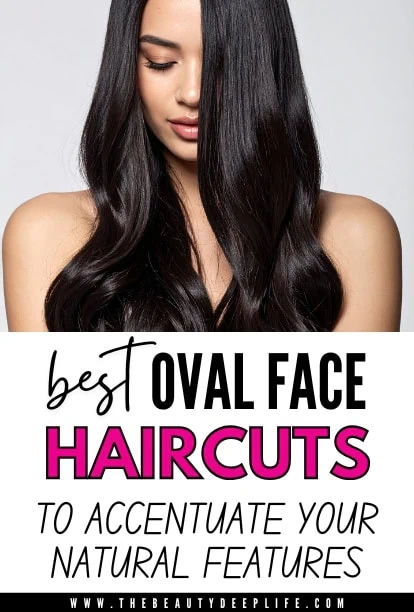
If there’s one face shape known for versatility, it’s the oval face. Because the proportions are naturally balanced, in an oval face shape, you can wear an impressive array of haircuts, from sharp bobs and soft shags to long layers, curtain bangs, and cropped pixies.
That said, just because an oval face can pull off almost any haircut doesn’t mean every version of every cut is equally flattering. The best oval face haircuts don’t just “work” with your face shape. They bring out your best features, add movement in the right places, and complement your hair texture and styling routine.
In this guide, we’re breaking down the hottest oval face haircuts, from timeless cuts to trend-forward styles. So let’s begin, ladies!
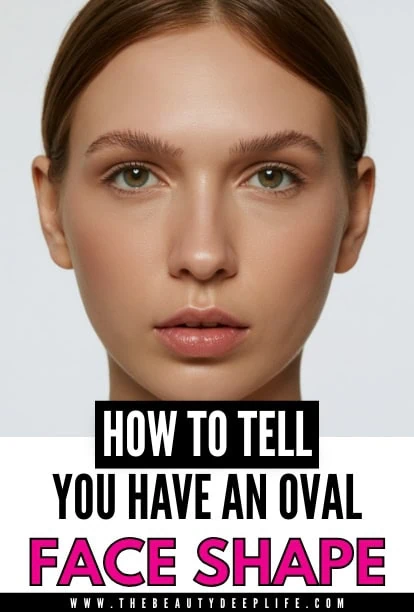
How To Tell If You Have An Oval Face Shape
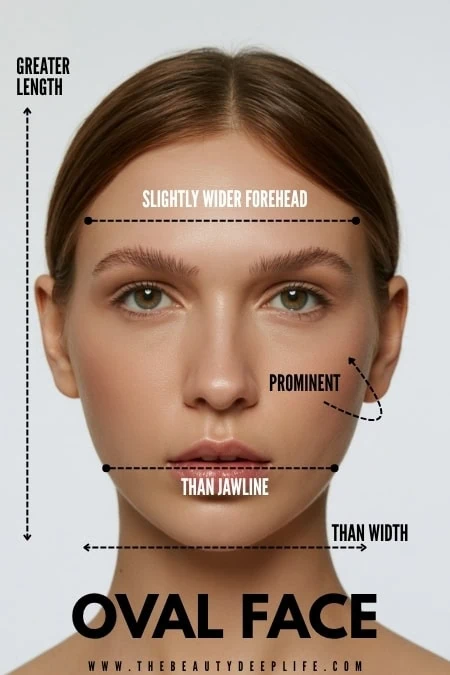
An oval face shape is typically longer than it is wide, with gentle, rounded edges and balanced proportions throughout. The forehead is usually a little wider than the jawline, and the cheekbones often stand out as the most prominent feature.
Unlike square faces, the angles are subtle rather than strong, and unlike round faces, there’s a bit more length through the overall shape.
Quick signs you may have an oval face:
- Your face is longer than it is wide.
- Your forehead is slightly wider than your jawline.
- Your cheekbones are the widest point of your face.
- Your jawline looks rounded rather than angular.
If you’re still not totally sure you have an oval face shape, you can always check out our full guide to the different face shapes and the best hairstyles and haircuts for each one before choosing your next look.
What Makes Certain Haircuts Flattering On An Oval Face?
The best haircuts for oval faces usually aren’t about correcting anything. The goal is more about enhancing your features and choosing a cut that works with your hair type, density, and personal style. A well-suited haircut for this shape usually does one or more of the following:
- Draws attention to the eyes and cheekbones.
- Adds body so the hair doesn’t fall flat or drag the face downward.
- Uses layers, bangs, or varying textures for dimension and personality.
- Keeps the look in balance without overly elongating your features.
Because oval faces can handle so much variety, the biggest difference often comes down to placement. Where the layers hit, how the bangs frame the face, whether the bob is sleek or textured, and where the volume sits can all completely change the final effect.
In other words, oval faces can wear a lot, but the best oval face haircuts are those that work with both your facial structure and your everyday styling habits.
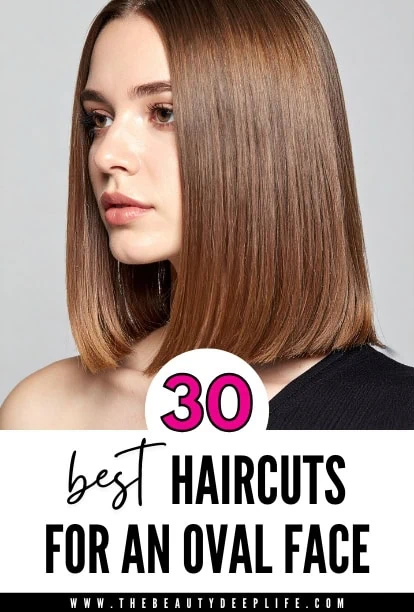
30 Best Haircuts For An Oval Face
These cuts do a beautiful job of showing off your features while leaving plenty of room to match your hair type and personal style.
1. Long Layers With A Middle Part
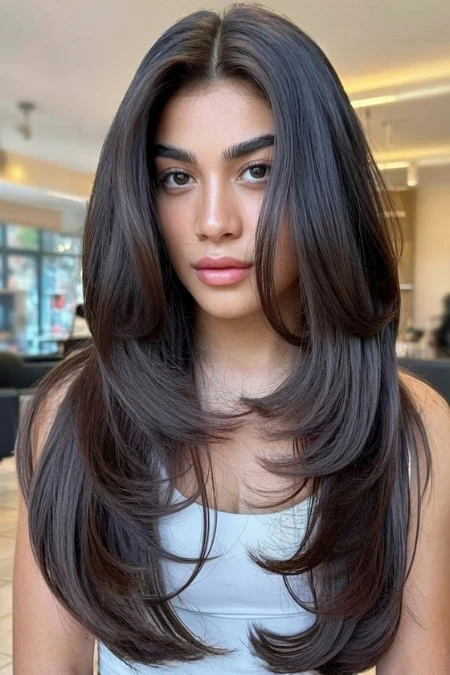
Long layers with a center part consistently look amazing on an oval shape. The layers keep longer hair from feeling too heavy or one-note, while the middle part enhances natural symmetry.
- Why it works: Highlights your face’s natural balance. Gives long lengths a lighter, more dimensional look. Stops extra length from making the face appear overly elongated.
- Best for: Straight, wavy, or curly hair. Medium to thick densities. Anyone who wants to keep long lengths but add more shape
- Styling tip: Use a lightweight blowout cream before drying, then add subtle bends through the ends so the layers show up without sacrificing that sleek center-part.
2. Face-Framing Layers
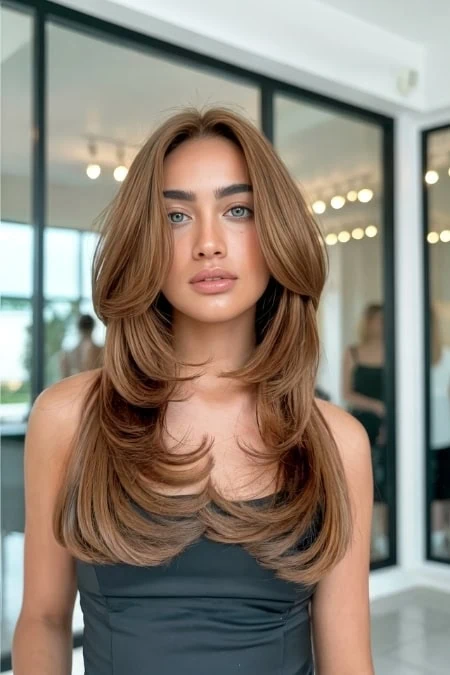
Want contouring around the front without committing to a dramatic chop? Face-framing layers are the answer! This cut brings subtle flow to the front and puts more focus on the eyes and cheekbones.
- Why it works: Calls attention to the cheekbones and eyes. Lends a gentle effect around the front without hiding your features. Refines the outline without disrupting balance.
- Best for: All textures. Fine, medium, or thick densities. Hair that needs more interest around the front.
- Styling tip: A round brush and a lightweight smoothing cream can encourage the shorter front pieces to flip away and accent your cheekbones.
3. Long Layers With A Deep Side Part
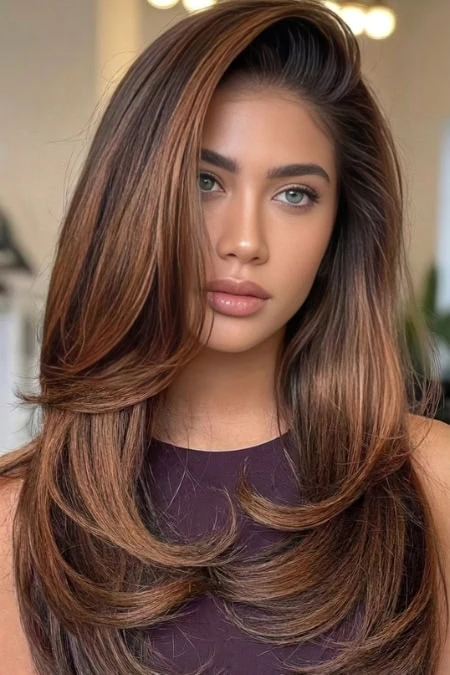
If you love layered length but want a little more drama, flip that part deep to the side. A deep side part produces instant volume through the crown and front.
- Why it works: Lifts the roots without throwing off facial balance. Creates a more voluminous profile. Prevents long hair from falling flat.
- Best for: Straight, wavy, or curly textures. Fine to medium densities that benefit from extra lift. Blowout lovers.
- Styling tip: Apply a volumizing mousse at the roots before blow-drying, then lift the heavier side of the part for extra body.
4. Curtain Bangs With Long Layers
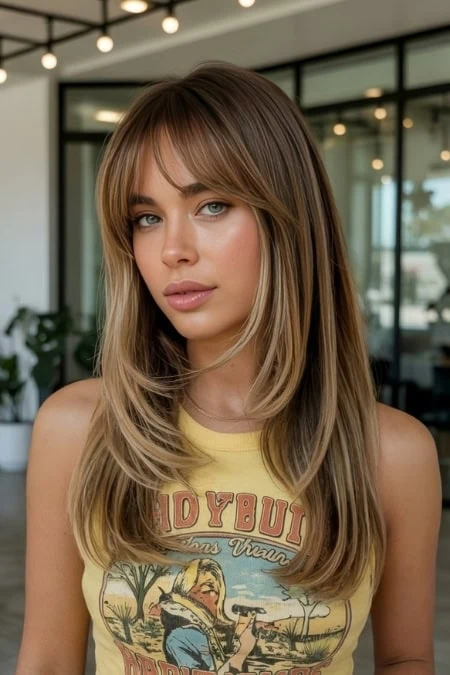
Curtain bangs paired with long layers are incredibly universally flattering. The layered length ensures the cut stays airy, while the parted fringe gracefully sweeps across the forehead.
- Why it works: Frames your features without closing them off. Accentuates the eyes and cheekbones. Highlights softness through the front while maintaining a harmonious look.
- Best for: Straight, wavy, or curly hair. Medium to thick densities that can support both fringe and long layers.
- Styling tip: Use a round brush or large-barrel hot tool on the bangs. Mist a little dry shampoo at the roots to keep the fringe airy.
5. Wispy Bangs With A Curly Shag
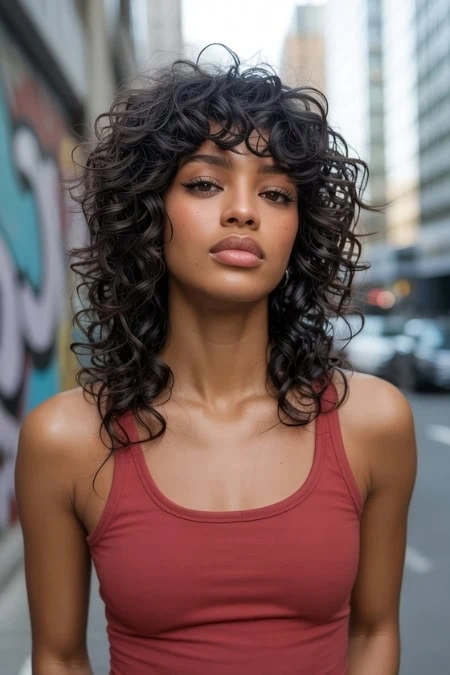
If you have naturally curly hair, a shag with wispy bangs adds personality and texture without swallowing up your face. The shaggy layers encourage curl definition, while the lighter fringe leaves the forehead clear.
- Why it works: Boosts texture and fullness without feeling bulky. Produces an appealing natural flow around the eyes.
- Best for: Naturally wavy, curly, or loose-curly textures. Medium to thick densities.
- Styling tip: Diffuse with a lightweight curl cream, then separate the bangs gently with your fingers so they stay piecey.
6. Bottleneck Bangs & Long Soft Layers
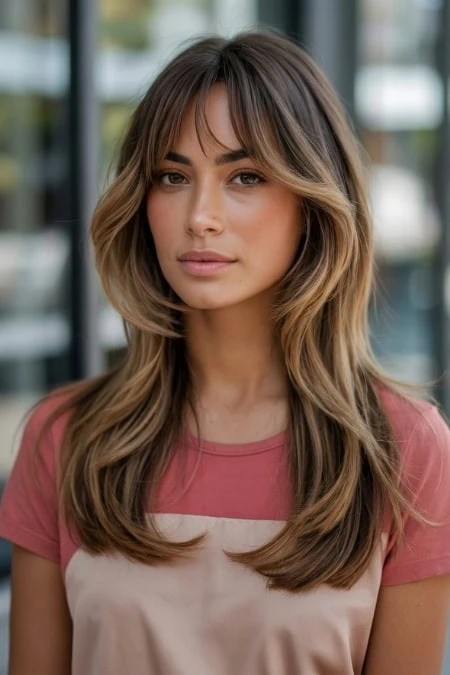
If the classic layered cut got dressed up for a date, it would be this look. The fringe starts shorter through the center and tapers into longer sides, blending seamlessly into longer lengths.
- Why it works: Introduces gentle contouring through the forehead without looking blunt. Pulls focus toward the eyes. Stops long hair from looking flat.
- Best for: Straight to lightly wavy hair. Medium densities that can hold the shape of the fringe.
- Styling tip: Use a round brush to curve the center slightly, then smooth a tiny amount of styling cream through the longer sides so they feather naturally.
7. Choppy Bob
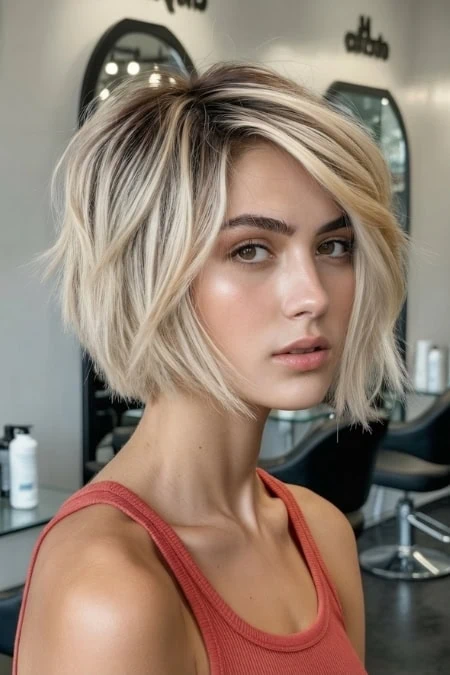
If a classic bob feels a little too well-behaved, the choppy bob is its rebellious cousin. With visibly textured ends, it brings personality to a shorter style.
- Why it works: Breaks up the outline in a relaxed way. Prevents the style from feeling boxy. Lends the cut a playful vibe.
- Best for: Straight to wavy hair. Fine to medium densities that need a bit more lift.
- Styling tip: Use a lightweight texturizing spray on dry hair, then twist a few sections with your fingers.
8. Chin-Length Blunt Bob
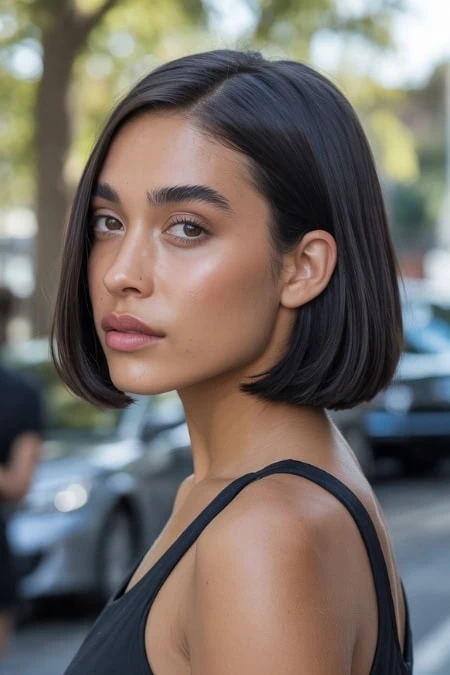
A chin-length blunt bob is sleek, sharp, and highly striking. Because the cut lands right around the chin, it naturally spotlights the lower jaw and cheekbones.
- Why it works: Zeros in on the jawline. Yields a strong, polished effect. The even proportions of an oval face stop the blunt line from feeling too harsh.
- Best for: Straight or smooth wavy hair. Fine to medium densities that benefit from a fuller-looking edge.
- Styling tip: Prep with a heat protectant and smoothing cream, then finish with a shine serum on the ends.
9. Wavy Bob
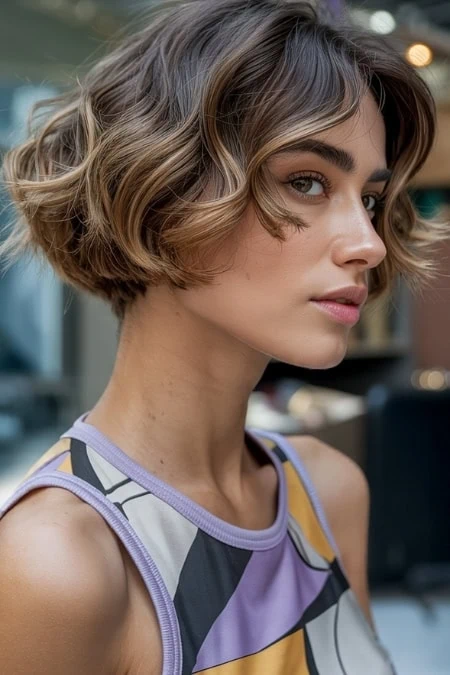
A wavy bob has that easy, undone quality that always feels fresh. The bend in the cut provides width through the sides and keeps the overall look from appearing too sharp.
- Why it works: Adds width in the right places. Leaves your features visible. Delivers movement without sacrificing form.
- Best for: Naturally wavy hair or straight hair that holds a bend well. Fine to medium densities.
- Styling tip: Make loose bends with a flat iron or wand, then finish with a lightweight sea salt spray.
10. Asymmetrical Bob
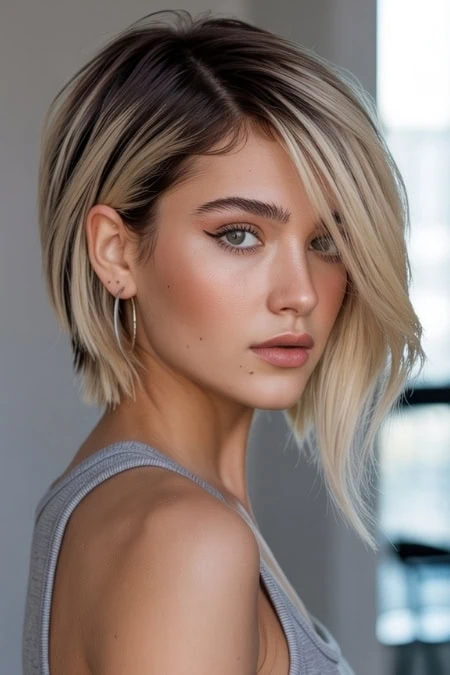
An asymmetrical bob adds visual interest and edge. The inherent symmetry of an oval face lets the uneven cut look strictly intentional rather than accidental.
- Why it works: Balanced features easily carry a dramatic outline. Feels editorial and current. Injects instant intrigue.
- Best for: Straight to lightly wavy hair. Fine to medium densities that hold sharper lines.
- Styling tip: A smoothing serum helps keep the angles well-defined so the asymmetry looks sharp and polished.
11. A-Line Bob
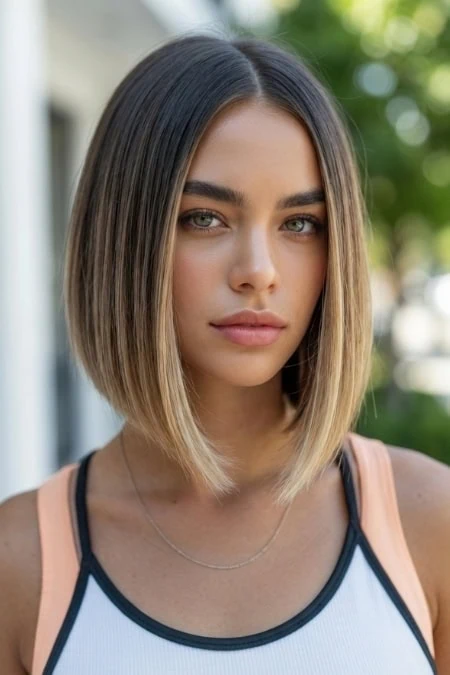
This cut is shorter in the back and gradually longer toward the front, giving it a clean, sculpted appearance. The front sections provide built-in framing, while the lifted back keeps the cut from looking too boxy.
- Why it works: Outlines the jaw with longer front pieces. Delivers definition without looking harsh. Leaves the overall style streamlined.
- Best for: Straight to softly wavy hair. Fine to medium densities that need more form.
- Styling tip: Blow dry with a smoothing cream for a cleaner line, or incorporate a subtle bend through the front pieces with a flat iron.
12. Inverted Bob
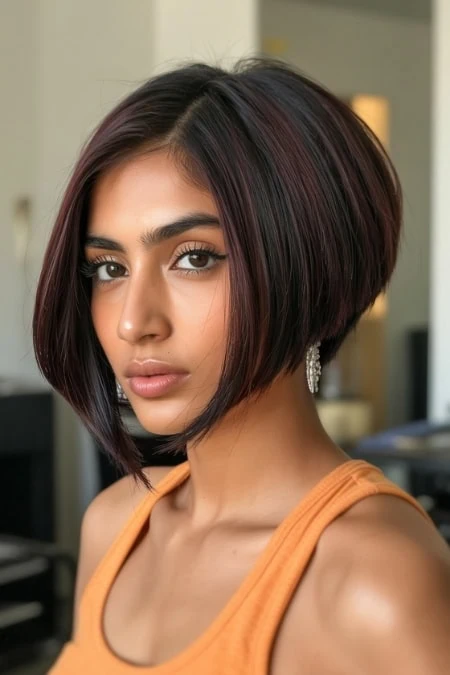
An inverted bob features stacked layers in the back with more length through the front. It is fantastic if you want ready-made volume.
- Why it works: Builds lift at the back without crowding the front. Preserves a longer front section to complement the cheeks. Results in a fuller look.
- Best for: Fine to medium hair. Textures that need more boost.
- Styling tip: Use a volumizing mousse at the crown before blow-drying, then smooth the front sections with a round brush.
13. Textured Bob
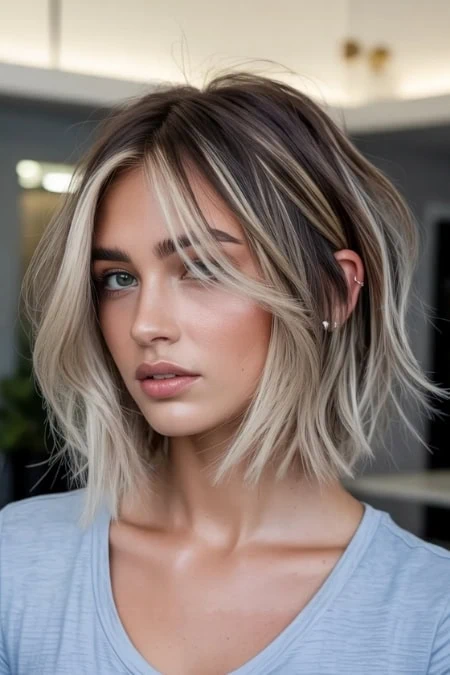
Think of the textured bob as the classic bob’s cooler, more laid-back sister. With separation through the ends, it feels less rigid than a blunt cut.
- Why it works: Imparts a gentle touch through the sides without hiding your features. Leaves the cut light. Feels relaxed.
- Best for: Straight, wavy, or softly tousled hair. Fine to medium densities. Hair with natural movement that looks good air-dried.
- Styling tip: Mist a dry texture spray through the mid-lengths and ends, then use your fingers to piece out the cut.
14. Blunt Lob
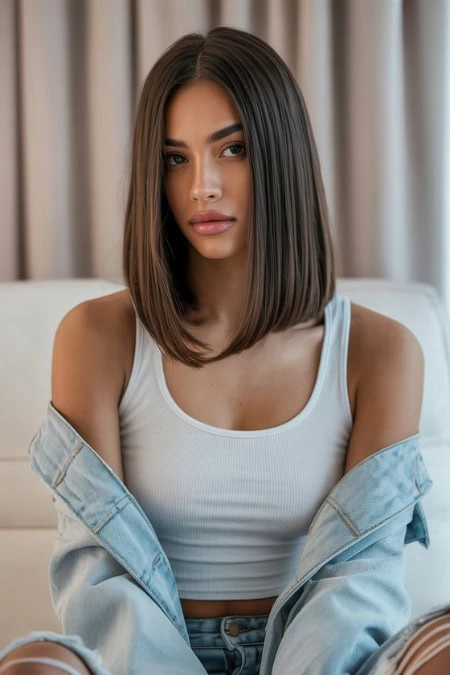
Want the sleek, full look of a blunt cut but aren’t ready for a shorter bob? Styled sleek and straight, the clean edge makes the hair look thicker, while the extra length grants a bit more styling freedom.
- Why it works: Makes the ends look denser. Provides a crisp edge without crowding your features. Balances clean lines with forgiving length.
- Best for: Straight or smooth wavy hair. Fine-to-medium densities that benefit from a denser baseline.
- Styling tip: Use a smoothing cream before blow-drying and lightly tuck the ends under with a round brush.
15. Angled Lob
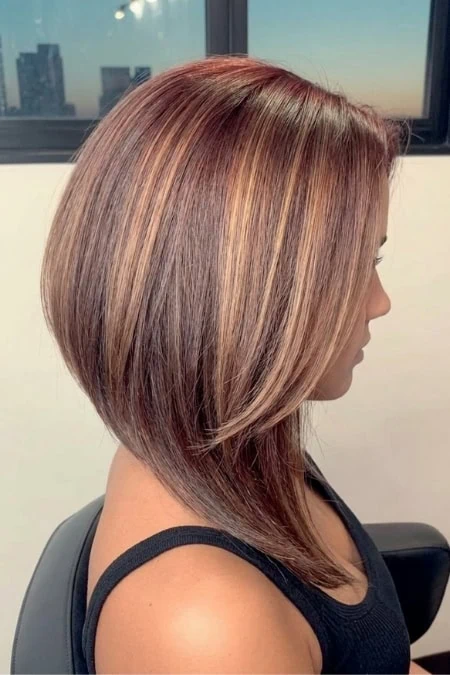
Want to give your classic lob a little more oomph? Try an angled lob. It’s shorter in the back and slightly longer in the front, resulting in a modern effect.
- Why it works: Contours the front gently. Delivers definition while staying wearable. Gives the cut a fresh, current vibe.
- Best for: Straight to softly wavy hair. Fine to medium densities.
- Styling tip: Blow dry with a smoothing cream, then add a slight inward bend to the front sections.
16. Sleek Lob
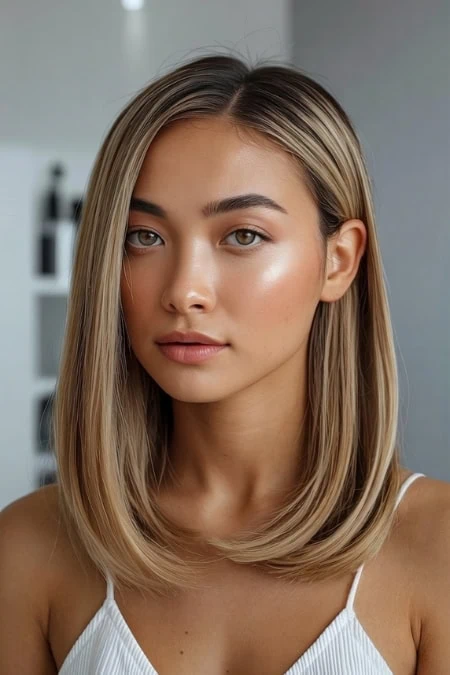
A sleek lob is a forever-stylish option because the line stays clean, simple, and polished. Sitting between a bob and longer lengths, it delivers strong visual impact.
- Why it works: Ensures your features remain fully visible. Looks refined without feeling severe. Works well with center and side parts.
- Best for: Straight or smooth wavy hair. Fine to medium densities.
- Styling tip: Prep with a heat protectant and smoothing cream, then finish with a lightweight shine serum.
17. Textured Lob
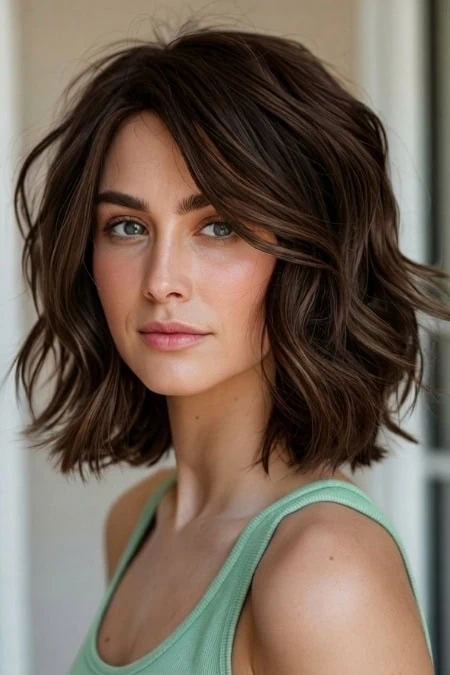
A textured lob gives you all the range of a longer bob with a little more movement built in. It’s a great middle-ground cut if you want something current and easygoing.
- Why it works: Builds body without feeling bulky. Softens the line of the haircut. Offers versatility—you can style it in several ways.
- Best for: Wavy hair or straight hair that styles well with bends. Fine to medium densities.
- Styling tip: Spray a dry texture spray through the lengths after styling so the lob feels airy.
18. Shoulder-Length Layers
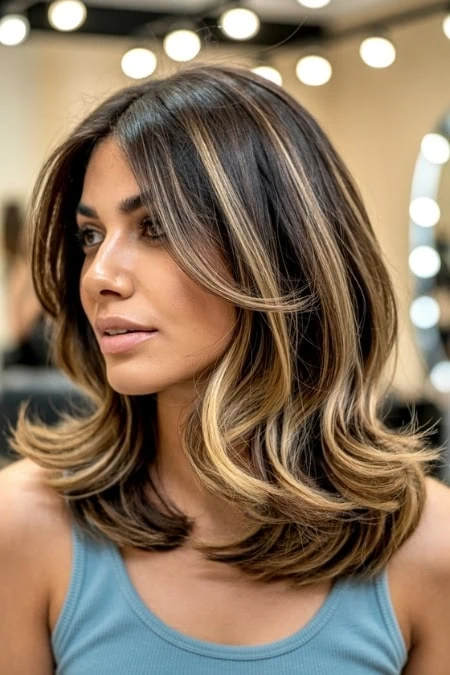
Shoulder-length layers are incredibly easy to wear. The layers ensure the style stays bouncy, while the shoulder-grazing length works well with waves, blowouts, or ponytails.
- Why it works: – Maintains proportion throughout. Adds flow without weighing down your features. Works across a wide range of styling preferences.
- Best for: Straight, wavy, or loose curly hair. Fine, medium, or thick densities.
- Styling tip: Apply a lightweight volumizing mousse before blow-drying, then use a round brush to give the layers bounce.
19. Medium-Length Layers With Sweeping Volume
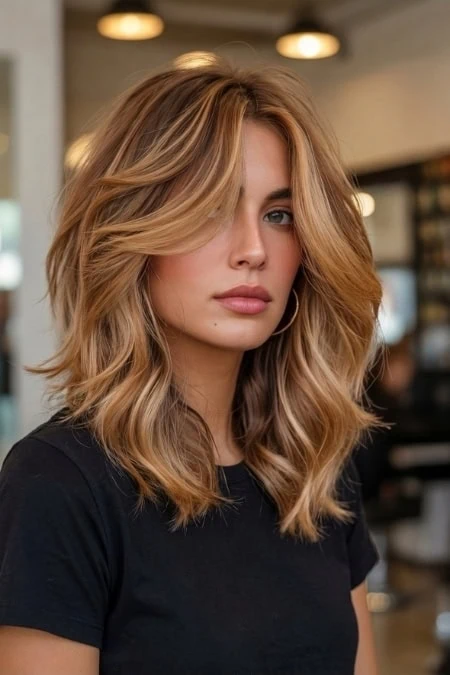
This look is all about that soft, bouncy result that says “I just left the salon.” The extra lift through the front and crown allows the haircut to come across fuller.
- Why it works: Imparts fullness without overpowering your bone structure. Lifts the front beautifully. Stops medium lengths from looking one-dimensional.
- Best for: Straight to wavy hair. Medium to thick densities that hold volume well.
- Styling tip: Use a blowout spray at the roots, then round-brush the front sections away from the face.
20. French Bob
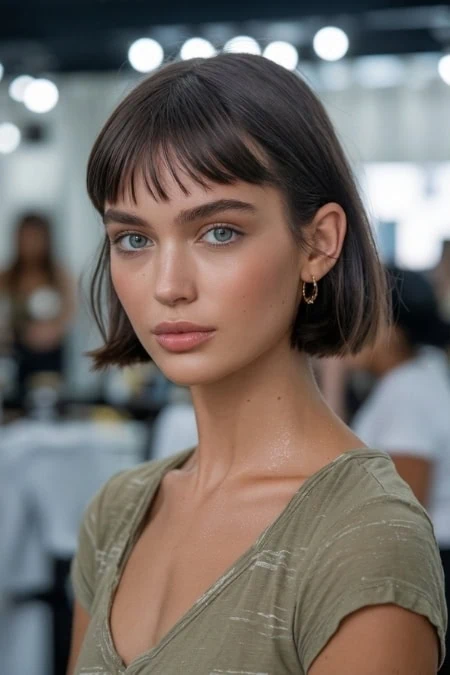
A French bob is a chic, jaw-grazing cut that’s playful and fashion-forward. Usually paired with tousled texture or light fringe, this shorter bob keeps your features on display.
- Why it works: Leaves your bone structure unmistakable. Accentuates the eyes and lips. Feels bold without becoming too heavy.
- Best for: Straight to lightly wavy hair. Fine to medium densities.
- Styling tip: Use a dry texture spray for an undone effect, then tuck one side behind the ear.
21. Blunt Bangs With Single-Length Long Hair
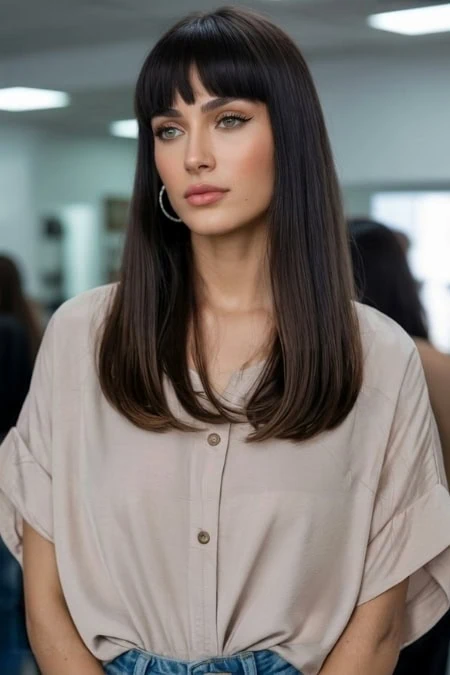
Create a striking, high-impact look with blunt bangs and single-length long hair. The strong fringe introduces definition across the forehead.
- Why it works: Offers a bold statement across the forehead without making the face feel crowded. Can visually shorten a longer oval face. The uninterrupted length creates an eye-catching finish.
- Best for: Straight or smooth wavy hair. Medium to thick densities.
- Styling tip: Use a small round brush or flat iron on the bangs, and run a shine serum through the lengths.
22. Classic Pixie Cut
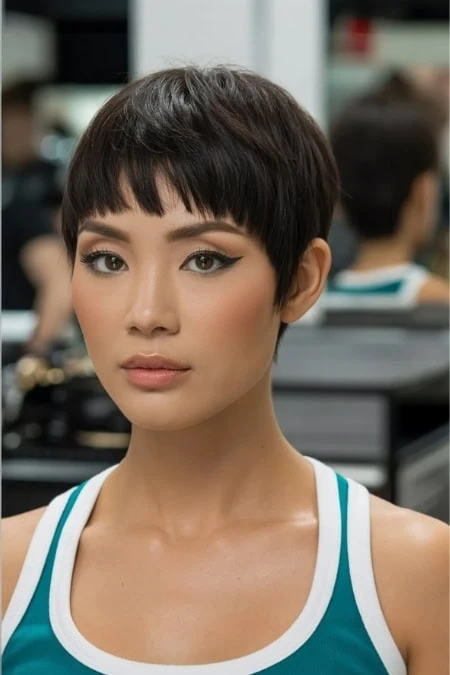
A classic pixie cut is crisp and confident. Because the length is cropped close, it puts the attention squarely on your eyes and bone structure.
- Why it works: Puts your features front and center. Keeps heavy bulk away from the face. Looks intentional and polished.
- Best for: Straight to lightly wavy hair. Fine to medium densities.
- Styling tip: Work a pea-size amount of flexible pomade through the top for definition.
23. Layered Pixie Cut
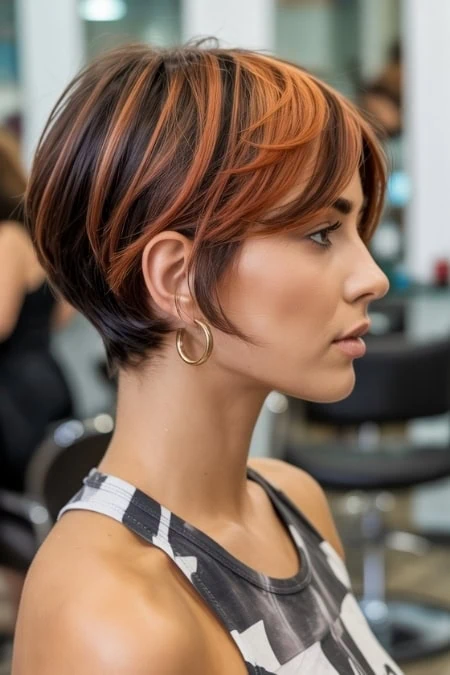
If the classic pixie is a sharp espresso shot, the layered pixie is the oat milk latte version. It’s a more dimensional take, with extra texture through the crown.
- Why it works: Adds variation and touchability to a cropped cut. Prevents short hair from looking flat. Feels airy and fashionable.
- Best for: Straight, wavy, or lightly textured hair. Fine to medium densities.
- Styling tip: Use a lightweight texturizing paste through the crown to highlight the layers.
24. Tousled Pixie With Side-Swept Bangs
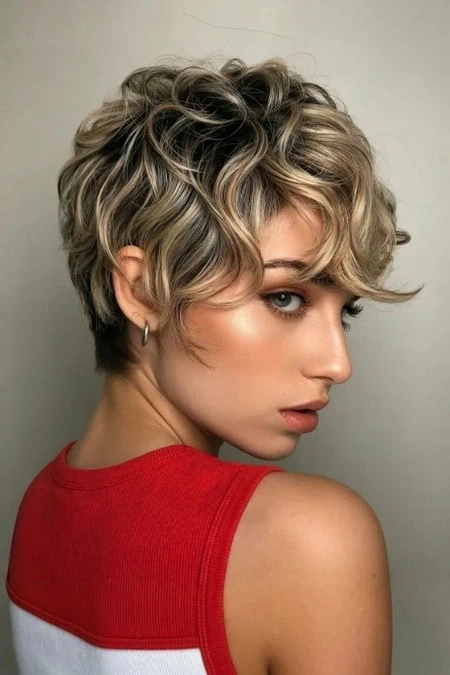
A tousled pixie with side-swept bangs feels highly relaxed. The side fringe brings movement across the front, making the cut feel easygoing.
- Why it works: Brings lightness without closing off your features. Offers a flattering sweep across the front. Feels very wearable.
- Best for: Straight, wavy, or naturally textured hair. Fine to medium densities.
- Styling tip: Apply texturizing cream through the top and fringe, then rough-dry.
25. Long Shag With Face-Framing Pieces
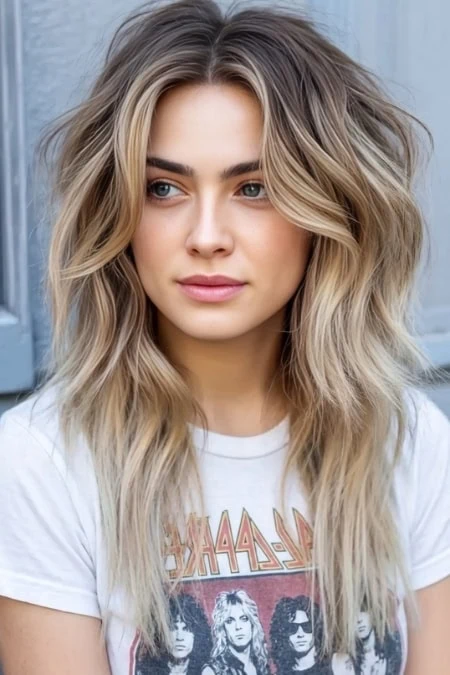
The long shag brings rock-and-roll energy to long hair without losing precious length. The shorter front pieces help break up the weight.
- Why it works: Infuses hair with airiness and bounce. Stops long hair from looking too uniform. The face-framing layers enhance your features.
- Best for: Wavy, curly, or textured straight hair. Medium to thick densities.
- Styling tip: Use a texture spray through the mid-lengths, then scrunch or diffuse.
26. Soft Shag With Curtain Bangs
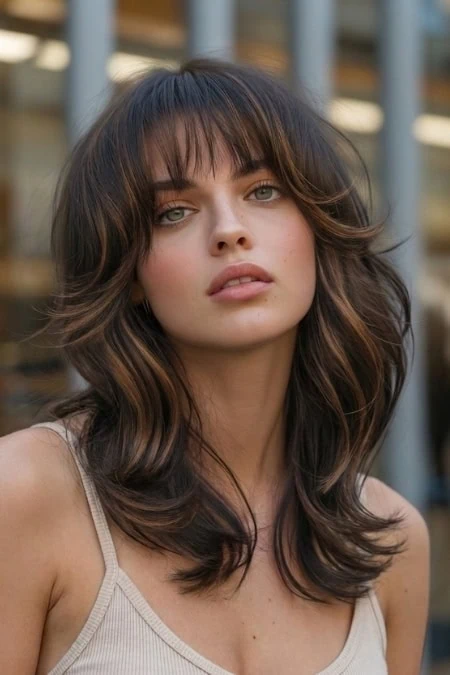
A soft shag with curtain bangs is an approachable take on the shag trend. The layers breathe life into the cut, and the curtain fringe provides a gentle outline.
- Why it works: Maintains a light, effortless feel. The curtain bangs enhance your face nicely. Feels current and approachable.
- Best for: Straight, wavy, or loose curly hair. Medium to thick densities.
- Styling tip: Blow out the curtain bangs away from the center, then mist a dry texture spray through the lengths.
27. Lob With A Deep Side Part
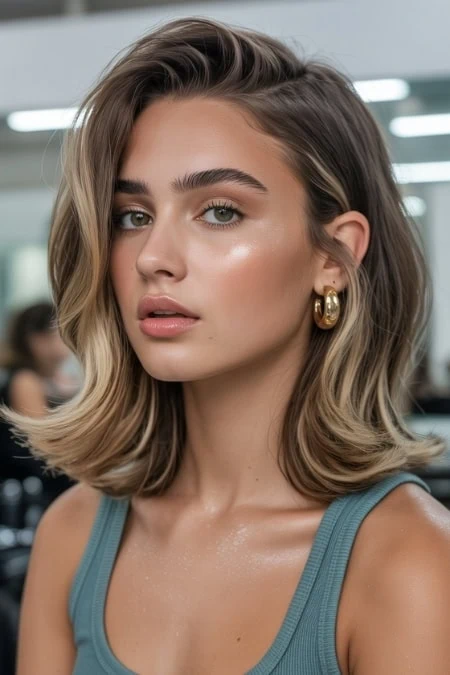
Parting your hair in the middle is fine, but a deep side part adds instant glamour. The extra lift at the roots gives the cut more fullness and interest.
- Why it works: Brings volume and subtle asymmetry. Leaves your features clear while contouring the front. Gives a classic lob more dimension.
- Best for: Straight to wavy hair. Fine to medium densities.
- Styling tip: Apply a root-lifting spray before blow-drying, then direct the front section across the forehead.
28. Curtain Bangs And Long Waves
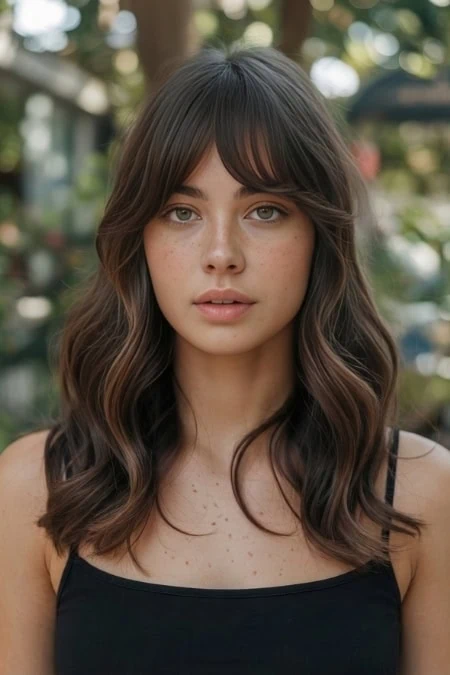
Curtain bangs and long waves bring a sense of ease to your hair. The curtain fringe elegantly frames the cheekbones without adding unnecessary heaviness.
- Why it works: Prevents long hair from looking limp. Enhances the front gently. Produces a feminine and flowing finish.
- Best for: Straight hair that styles well with waves or naturally wavy hair. Medium to thick densities.
- Styling tip: Use a large-barrel curling iron for loose bends, then finish with a lightweight texture spray.
29. Bixie Cut
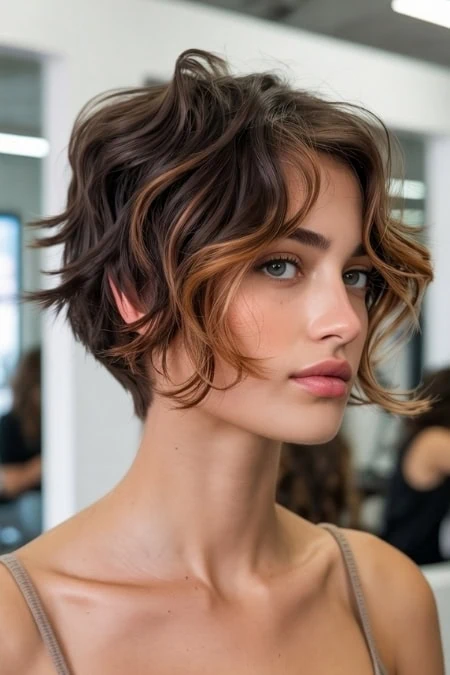
A bixie cut blends the cropped ease of a pixie with the look of a bob. It still gives you that “Look, I have cheekbones!” effect of a super-short cut.
- Why it works: Keeps short hair light and easy to wear. Brings emphasis around the front while showing off your bone structure. Feels flirty and modern.
- Best for: Straight to wavy hair. Fine to medium densities.
- Styling tip: Work a small amount of styling cream through the ends and crown to define the cut.
30. Curly Shoulder-Length Layers
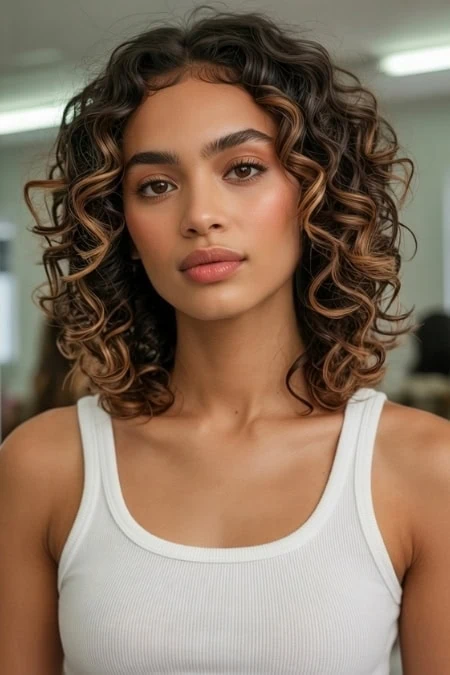
Curly shoulder-length layers give curls life and bounce without taking the hair too short. The layers encourage a more defined curl pattern.
- Why it works: Adds width through the sides in a lovely way. Encourages curls to fall into a more flattering outline. Leaves the haircut lively and textured.
- Best for: Naturally curly or loose-curly hair. Medium to thick densities.
- Styling tip: Apply a leave-in conditioner followed by a curl-defining foam, then diffuse.
FAQ About Oval Face Haircuts
Is the oval face shape really the most adaptable for haircuts?
Yes, oval faces suit a wide array of styles, including all we’ve covered in this article. The best choice still depends on your hair texture, density, and personal aesthetic.
What should you avoid when choosing haircuts for an oval face?
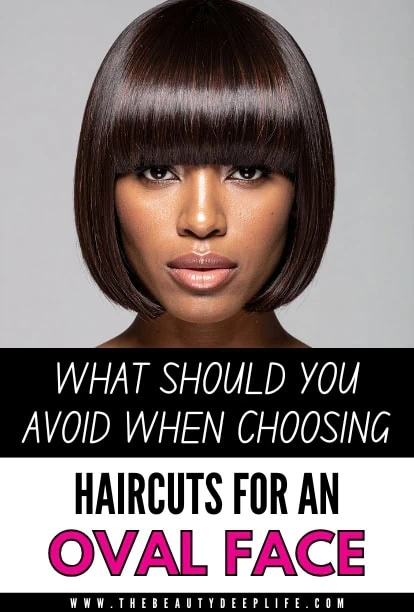
While you can wear almost anything, these styles can be less forgiving:
- Very long, flat, one-length hair with no layers.
- Extra-heavy blunt bangs that cover too much of the forehead.
- Cuts that fall limp and lack body around the cheeks.
In general, layers, texture, and a touch of softness through the sides are usually the safest bet.
How can I make an oval face look less long?
If your oval face leans longer, consider cuts that add width or fullness through the sides instead of just extra length. Great options include:
- Shoulder-length layers
- Bobs and lobs
- Soft waves
- Shag haircuts
- Curtain bangs
Avoid ultra-long, flat hair if your goal is to make the face look less elongated.
Is long hair good for oval faces?
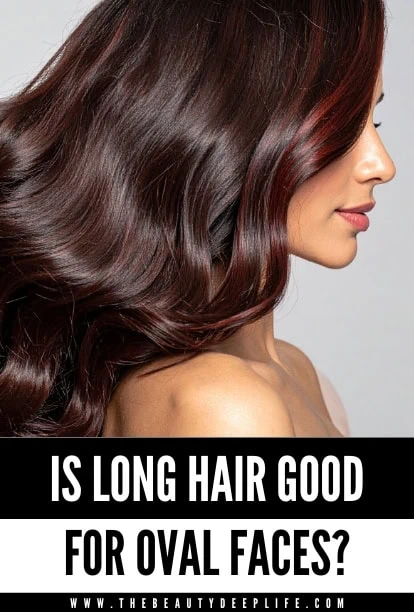
Yes, long hair can look beautiful, especially if it incorporates:
- Layers
- Face-framing pieces
- Soft waves
- Curtain bangs
Long hair usually looks best when it has body, since very long, flat, one-length hair can sometimes stretch the face visually.
The Wrap-Up
When it comes to the best haircuts for an oval face shape, your biggest advantage is your wealth of options. Because your bone structure has such lovely symmetry, you’re not limited to just a few “safe” styles. You can confidently rock everything from long layers and lob cuts to bobs, shags, pixies, and other shorter, more statement-making looks.
The real key is choosing a look that aligns with your hair texture, density, styling preferences, and maintenance routine. The most flattering cuts draw focus to your best features, add dimension in the right places, and feel like a genuine extension of your personal aesthetic.
Start with the length you feel most comfortable with, then customize it with layers, bangs, or added texture to make it uniquely yours.
Related Articles:
- Haircut For Face Shape: The Ultimate Guide To Flattering Styles
- Short Haircuts For Women That Prove Less Hair = More Style
- 31 Long Bob Styles & Cuts We’re Totally Obsessed With
- The Only Pixie Cut Guide You’ll Ever Need (32 Hottest Styles)
- The Ultimate Bangs Guide: Styles That Frame, Flatter & Transform